

Tech bros still dominate the discussions about so-called “AI” with false claims. Even most “AI”-critical researchers spend much of their time meticulously debunking (always only a subset of) claims, leaving vast areas of the economic consequences of “AI” unexplored. (Even the “AI”-evangelist Economist notices the absence of economic studies on the impacts of “AI” and documents how the little that exists is mostly written by economists who also hold industry affiliations.) “AI” systems distribute from the bottom to the top at an unprecedented pace. The consequences are massive and require a decided response to slow down, stop and be reversed. “AI” automates inequality at every level – at the input level, the output level, and at the financialised level. I will give a brief overview of each of these levels.
Take from the poor – resources, labour, health
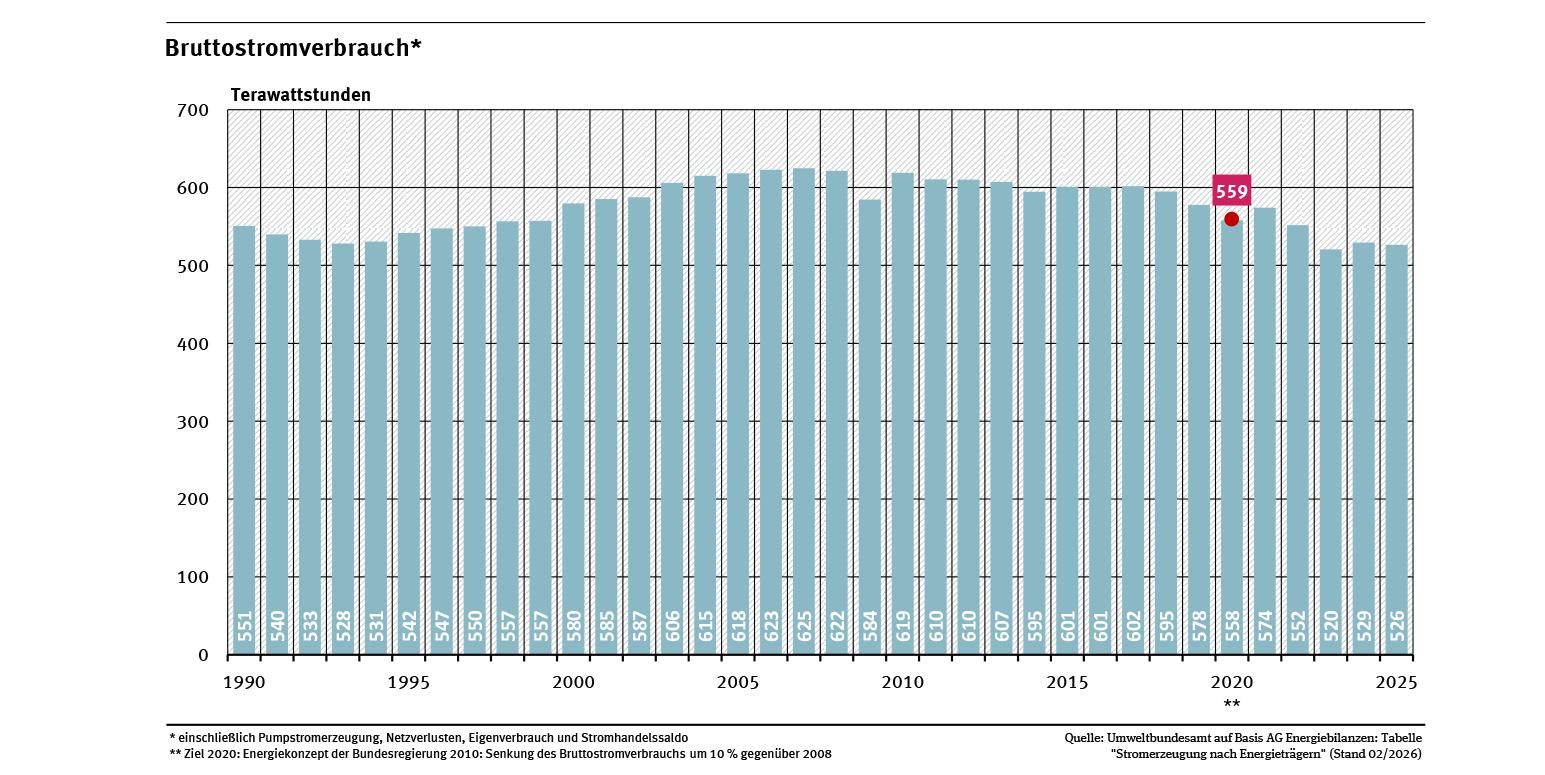
What do we need in order to get an “AI” model up and running? Large-scale extractivism. For the physical infrastructure, especially data centres filled with chips, we need a lot of raw materials that are produced in the Global South under usually horrible conditions. Poor communities, often also in conflict zones such as in Myanmar, work in mining in areas which are turned into sacrifice zones (and the EU wants to play a more central role in this – sovereignty and stuff, you know). We also need massive amounts of water (a data centre uses about as much water as a town of 10,000-50,000 people) and energy (estimated at overall 565 TWh in 2026, more than the total energy consumption in Germany) for those data centres. Bear in mind that we need somewhat different infrastructures for training models than for inference, i.e. getting trained models to provide outputs – hence we need A LOT of infrastructure which comes with different forms of environmental racism.
For the training data, we need a lot of labour that has gone into producing the content – text, music, images, videos – that the crawlers hoover up in the open internet (and Google/Meta also in their respective walled gardens like Instagram and YouTube). Most of this labour is unpaid and people who provided it did not intend it for this use. (I am not among those who have now flipped to argue in favour of stronger copyright – I am still both against copyright restrictions and against “AI” which is a coherent position, fortunately.) Add more precarious labour of the so-called data workers whose jobs consist in preparing the data, i.e. labelling data to make sure a cat is recognised as a cat and not as a lion. This requires data workers to label illegal or disturbing data such as pornographic or racist content, content featuring violence etc. which comes at a high psychological toll.
Give power to the managers
But maybe this is a one-off redistribution and it gets better once we have “AI” models in place? Let’s see. “AI” adoption often looks like this: Managers do not want to get left behind by competitors and want to reduce their wage bill. Hence, they take a (partly wrong, partly incomplete) guess on what workers do and consider that to be fairly easy and automatable. They then talk to some consultancies on how to bring “AI” into the business. (The less affluent ask, guess what, a chatbot for advice. Funnily, this is one of the few domains where outputs by “AI” and consultancies might barely differ as both are based mostly on remixing data points without any understanding.) Those consultants make a bunch of recommendations and a few of them get pushed down on workers as part of the company software, LLM subscriptions and “AI” guidelines. Any resistance gets dismissed as lack of “AI” literacy or aversion to change (in tech jobs) or psychologised as technophobia (in non-tech jobs).
In practice, productivity effects (a questionable measure for societal progress) are limited at best. Various studies at the macro and micro level show this. Besides, numerous companies have had to rehire workers as they had underestimated the scope of the jobs to be displaced or overestimated “AI” capabilities. Among them is Klarna (already in May 2025), Ford admitted that “mistakenly, we thought that by just introducing artificial intelligence and ingesting the design requirements that we had, that that would produce a high-quality product” (what an indictment), and recent industry surveys suggests that 32% of hiring managers report re-hiring people thought to be made redundant due to “AI”.
What matters is that workers get the message: You are replaceable, do not ask for a pay rise, do not join the union, do not organise.
But that is not the whole point. Even when its implementation is not that successful, “AI” shifts power from workers to management. Fair, “AI” is not the first technology to do that – we know from earlier technological changes that productivity is not the only consideration in choosing and designing work processes, but the disempowerment of workers is key. “AI” means there is a handful of people who design and implement the system (and roughly understand how it works – roughly is important because it is a black box with millions of dice inside, even for the engineers); everybody else just becomes a user who is told what to do with the output. There are a few options: Some firms just expect more output (presentations, code, text etc) than before without being able to accurately judge (or care about) the quality of that output. Other firms, especially those with a lot of data from past work, feed that data into an “AI” model and thereby produce default outputs that extrapolate past outputs into the future. And some firms throw an “AI” at what usually would be some form of knowledge management and tell workers to use the chatbot – or other completely useless forms of adding “AI” to change processes. What matters is that workers get the message: You are replaceable, do not ask for a pay rise, do not insist on overtime, do not join the union or workers’ council, do not organise.
The bubble is their game – we lose now AND later
Not too much has changed since I wrote about the misconceptions about the “AI” bubble in August 2025. And I am still annoyed by how supposedly critical tech commentators think the popping/deflating/flattening is a moment to prepare popcorn. What has changed is: a) the valuations of “AI” companies have continued to grow (more money for their CEOs and owners), b) “AI” has become even more resource intensive (such that many companies now restrict “AI” usage to limit spending, ICYMI one company unintentionally spending USD500m in a month stood out), c) “AI” is further permeating society, from usage by government ministers to increasing reliance on “AI” valuations in ETFs and pension funds. The benefits accrue to those who reap giant returns now – even though “AI” is not even profitable. Since covid-19, economists have been fretting about a K-shaped economy: The wealthy accumulate more wealth (the upward-sloping leg), while the vast majority is on a downward trajectory (the downward-sloping leg). “AI” accelerates the K-shaped process towards unlimited inequality. Many reputable investment firms ask the question: How do we [i.e. the investors] make sure we gain as much as possible at the expense of everyone else? The expectation is clear: There is a bubble and most of the future losses will be socialised. “AI” companies will be bailed out by governments, possibly through a combination of tax-money bailouts, government guarantees and (temporary) nationalisation. Maybe not each and every one of them. But investors do not see a real risk for their long-term returns. This is because they think in terms of opportunity cost: They are fine with pulling the economy at large into a recession as long as they do not lose more than others, in relative terms. They know bubbles well because bubbles are a feature, not a bug of financial markets. If we – the big “we” – decided to no longer want bubbles, very different action would be needed.
What’s wrong if OpenAI and Bernie agree?
Policymakers and many progressives are tempted to fall for misleading mitigation strategies: They address, at most, one of the mechanisms driving inequality but leave the others in place. The most obvious recent example is the question of an “AI”-powered wealth fund. Guess, who wrote this: “Create a Public Wealth Fund that provides every citizen—including those not invested in financial markets—with a stake in AI-driven economic growth. […] Policymakers and AI companies should work together […]. Returns from the Fund could be distributed directly to citizens, allowing more people to participate directly in the upside of AI-driven growth.” It comes from OpenAI. And Bernie Sanders, a supposedly leftist Democrat, is very happy to take on the role of the said policymaker who works together with the companies. In his proposal, he even acknowledges that his idea has “been endorsed by some of the leading A.I. companies in America”. But it is a trap. It would bring us into the conflict of interest: on the one side, people are exploited through “AI” as data centres take the water that is no longer available for drinking or producing food and as “AI” makes jobs worse and paid less; on the other side, people are given the promise of a financial benefit from their own exploitation which, in this case, also means they would become directly invested in making sure “AI” generates profits, at any societal cost, and get hit once the “AI” peak is crossed. “AI” evangelists have also been endorsing a universal basic income for a long time – Musk came out in favour of it in 2016. Smart scholars have been pointing out that this obscures the symbolic violence inherent in “AI” narratives, telling us to take the breadcrumbs and stop protesting or even demanding a say in whether “AI” gets implemented.
More inequality – who cares?
This is not a comprehensive list of mechanisms through which “AI” makes societies more unequal. Others include:
- The environmental and health damage tends to concentrate in poorer areas. Data centres in the US are more likely to be constructed in areas with already high levels of air pollution, groundwater scarcity and other factors that are correlated with poverty which, in turn, is correlated with BIPOC status. The same applies to power plants needed for the data centres.
- “AI” is built to discriminate. Its outputs by default amplify past biases, thereby aggravating the situation of the marginalised majority – FLINTAs, racialised communities and others.
- Through “AI”, larger tech companies extract both more money and more insights (in the form of data) from the usually smaller companies that adopt “AI”. Large companies grow, while smaller companies pay more for “AI” subscriptions and vigorously compete for survival.
My impression is that there is not a lot of ambiguity regarding the question of whether “AI” drives inequality. (Whether it can be repurposed to reduce inequality is a separate topic; in brief, that seems to me like using an axe that cuts wood to remove water from a boat. It is the wrong tool that probably does significant damage even when used with good intentions.) What baffles me is the absence of attention. Maybe people are just too busy debunking “AI” lies, or – maybe worse – they no longer care. In recent interactions with people working at civil society organisations, I got the impression that topics like inequality are perceived as outdated or too negative. Instead, many organisations go for supposedly “positive”, but deeply conservative-nationalist framings like sovereignty because that means they can get more money from donors. I, personally, think that whoever beliefs in fundamental equality really needs to care about “AI” and how to push back against it. At all levels.
Photo by Etienne Girardet on Unsplash